
Strategy
The Testa Grigia long-term scientific strategy is designed in line with the strategic plans of the Global Atmospheric Watch (GAW) network and the World Meteorological Organization (WMO), while the specific research themes are defined based on scientific priorities identified by the European Commission and the WMO.
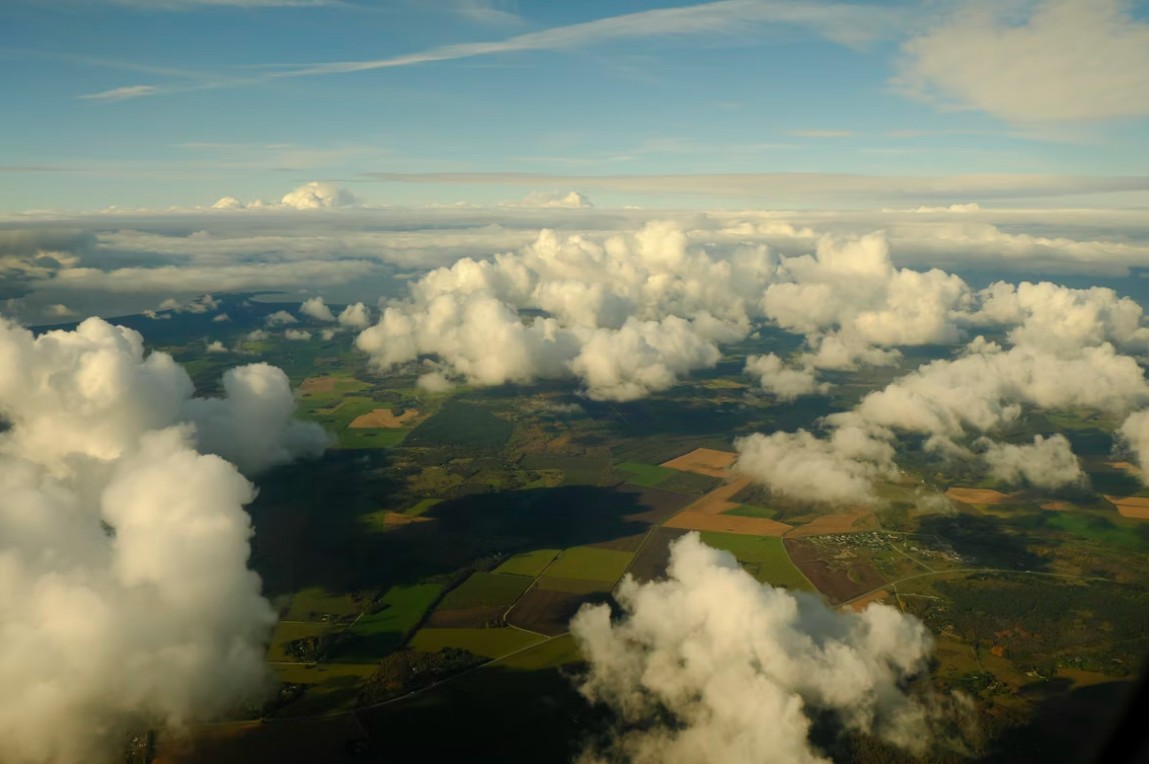
BACKGROUND ATMOSPHERIC COMPOSITION
Due to its high elevation, atmospheric measurements at Testa Grigia are representative of background conditions for about 90% of the time, making negligible the influence of boundary layer and local emission sources. This unique position enables the observatory to monitor atmospheric composition and collect data that accurately represents atmospheric background.

CLIMATE CHANGE RESEARCH
The high elevation of the observatory places it in the clouds for several days each year. According to the IPCC report, aerosol-cloud and cloud-radiation interactions continue to be significant source of uncertainty in climate predictions. Observing cloud properties often requires experiments that extend beyond the duration of balloon or UAV (unmanned aerial vehicle) observations. For this reason, ground-based sites like Testa Grigia are invaluable for measuring clouds and cloud properties over the long term.

ATMOSPHERE-CRIOSPHERE INTERACTION
Testa Grigia is located near glaciers and perennial snow, making it an ideal site to investigate atmosphere-cryosphere interactions and study the impacts of climate change and long-range pollution on glacier properties throughout the entire year.
Project and Activities
On-going:
Rifugi sentinella project (CNR and CAI, since 2023)
SAMADHA project (cosmic ray dosimetry) (INFN-Torino, since 2021) https://samadha.to.infn.it/index.html
Cosmic ray neutron monitoring (INAF-IAPS Roma, since 2014)
2025: Summer school in Mountain Medicine
2025: Spatial and temporal variability of atmospheric temperature in Valle d’Aosta region (Currucular internship)
2024: Intensive field experiment: Analysis of dust and wildfire plume transport at multiple sites in Valle d’Aosta region.
2023- 2026: Light-Absorbing ParticleS in the cryosphere and impact on water resourcEs (LAPSE), PRIN – MIUR
2023: Summer school in Mountain Medicine
2023: Solar UV radiation monitoring (integrating the dataset since 2006 at the neighbouring station of Plateau Rosa – Air Force).
2020: PRISCAV project (Attività scientifica di CAL/VAL della missione PRISMA), ASI
2003: Neutron spectrometry with passive detectors (INFN Torino)
2000-2020: Dosimetric measurements (INFN Torino)
2000’s: MITO project (Cosmic Microwave Background Radiation measurements) (CNR Roma)
1980’s: Cosmic ray air shower measurements, gamma ray astronomy (CNR Torino)

Publications
List of publication, published with topics in connection with the Testa Grigia Observatory.
You have published a paper in relation to the Testa Grigia Observatory but you are not on the list? Please contact us here.
Recent publications
Ferrarese et al. Inspection of high–concentration CO2 events at the Plateau Rosa Alpine station, https://doi.org/10.5094/APR.2015.046, 2015
Apadula et al., Thirty Years of Atmospheric CO2 Observations at the Plateau Rosa Station, Italy, https://doi.org/10.3390/atmos10070418, 2019
Di Mauro et al., Evaluation of PRISMA Products Over Snow in the Alps and Antarctica, https://doi.org/10.1029/2023EA003482, 2024
Ravasio et al., Retrieval of snow liquid water content from radiative transfer model, field data and PRISMA satellite data, https://doi.org/10.1016/j.rse.2024.114268, 2024
Villalobos, Yohanna, et al. “Towards improving top–down national CO2 estimation in Europe: potential from expanding the ICOS atmospheric network in Italy.” Environmental Research Letters 20.5 (2025): 054002.
Gilardoni et al., Characterization of aerosol microphysical properties and transport mechanisms to the Alps, EAC Book of Abstract, 2025.
Historical publications
Petriconi G.L. et al., A Cyclic Change in Possibilities of Precipitation at the Plateau Rosa Meteorological Station, and the Subjacent Valtournanche Valley, Nature 196.4853, 1962.
This study found periodicities in precipitation events, not directly matching annual temperature cycles, suggesting other drivers. It highlighted that precipitation processes at high altitudes (Plateau Rosa) involve complex interactions of different air masses, affecting liquid water content and ice formation. Researchers noted that while temperatures often allowed for liquid-to-ice transitions, actual precipitation events didn’t always follow these conditions, pointing to deeper atmospheric influences. This research theme is still relevant today since cloud phase defines the way cloud impact regional climate
Briatore L. and Leschiutta S., Evidence for the Earth Gravitational Shift by Direct Atomic-Time-Scale Comparison, Il Nuovo Cimento, Vol 37 N2, 1977.
In 1976 Luigi Briatore and Sigfrido Leschiutta tested the General Relativity Theory by measuring with cesium atomic clocks a difference of 30 billionths of a second per day between the clock placed on the top of the Plateau Rosa, at 3500 meters above sea level, and one placed in Turin at 250 meters above sea level. General Relativity predicted that, where the gravitational field was smaller, clocks would accelerate: the experiment promptly confirmed this thesis and after 68 days the clock placed in Turin had lost 2.4 10-6 seconds compared to the one placed in Plateau Rosa)
Longhetto et al., A study of greenhouse gases and air trajectories at Plateau Rosa, https://link.springer.com/article/10.1007/BF02506642, 1995
This paper presents and discusses for the first time the time series of CO2 air concentration data measured at Plateau Rosa (3480 m a.s.l.—Italian Western Alps). These results have shown the leading role played by specific atmospheric circulation patterns in creating situations of not fully mixed air streams and helped to define a «meteorological» selection scheme for CO2 data to be used in evaluating reliable annual trends.